YOUTH
Welcome to the information site for youth members of HC 's-Hertogenbosch!
On this page you will find information about:
- Parents
- Participate
- From Youngest Youth to U18
- Trainings
- General information
At HC 's-Hertogenbosch, playing hockey is a joy. Our youth can have a blast during games and practices, and parents enjoy themselves on the sidelines, sharing a drink, networking, and so on. It's all possible at our club. But there's a lot involved in making it possible for our youth to play hockey. Below you'll find information about how things work at our club and what the expected contributions are from players and parents. For those new to hockey, we've listed a few things. When registering their child, parents are asked to indicate which volunteer roles they can fulfill. Of course, parents can also contact the committees directly to organize a one-time activity or join a committee. At HC 's-Hertogenbosch, we do it together!
Parents
What does the club expect from parents?
Coaching broad teams
The club relies on parents for coaching. The youth and mini committees usually receive sufficient applications from parents interested in coaching a team. If not, the youth and mini committees will search for coaches. Preference is given to coaches with playing experience. A maximum of two coaches per team may apply. Coaches are expected to have a good understanding of the game, enjoy coaching positively, promote team building, arrange practice matches, arrange substitutes, fill out a match form digitally for each match, and attend the coaching evening at the start of the season. Coaches with little experience can consult the coach's booklet (available for U12, U14, U16, and U18 on the KNHB website). Highly recommended! There is a special information form for coaches, which can be requested from the youth committee.
Indoor hockey and hall monitoring by parents
We try to have as many teams as possible play indoor hockey in the winter. However, indoor capacity for matches and training sessions is limited. Only the top three teams from our club (e.g., U16-1, U16-2, and U16-3) play indoor hockey in the KNHB league during the winter. All lower-level teams can register to participate in the HICB (Hockey Indoor Cup Brabant). We organize a competition of 6-8 matches indoors with neighboring clubs. Parents of teams playing indoor hockey are asked to serve as indoor attendants. The main duties of the attendant are welcoming the teams, keeping track of time and scores, and entering the results on the laptop. If at least two parents from each team want to participate in the indoor attendant pool, the match days can be divided among a larger group. We organize an information evening for the indoor attendants. During this evening, we also create the schedule together. Parents therefore always retain control over their own availability. The basic principle is that parents are the hall monitors on their own child's match day. Parents are also asked to occasionally referee their son or daughter's match.
Parents' driving schedule
To be able to play away games, parents are expected to drive. The driving schedule is set by the coach or manager. If parents are unable to attend, they must swap places. Coaches rotate their team's driving shifts.
Bar service for parents of U14 youth
Parents of the U14 youth team take turns tending the bar on Saturdays, under the supervision of the bar committee. Each team receives an email from the youth committee each week, which is for home games, of course! It only takes two hours per team. It's up to the parents how many they have. A minimum of two parents per hour is required. So, if four parents share the time, there's still plenty of time to watch their son or daughter. The email is sent to the coach, but they can also ask a parent to coordinate this. Because we have so many C-level youth, a team only gets one or two shifts per season. That's not too bad!
Reception desk for the youngest youth and youth on Saturdays by parents O12
On Saturday mornings until 10:15 AM, parents of a junior team will assist at the reception desk. The team will receive an email, and two parents will then staff the reception desk. A member of the junior committee will always be present to provide support. From 10:15 AM, the parents of the U12 youth team will take over.
Join in!
What contribution does a youth member make?
Refereeing matches (U18 and U16)
From U16 onwards, all players will take a refereeing course. First-year B players will receive an email invitation from the refereeing committee for the refereeing course. This course lasts three evenings, including an exam. After obtaining their refereeing diploma, players will be assigned to refereeing by their coach/manager. Not refereeing means not playing. If a player does not obtain their diploma, they must retake it.
Instructions for refereeing matches
The referee committee designates the matches that each team will referee. The team will receive an email about this, and it will be included in the match schedule on the website and in the app. Within the team, they can work out a schedule with the coach regarding who will referee when. Some players prefer refereeing to kitchen duty. The coach/manager can take this into account when scheduling the team. If someone doesn't show up to referee, they also disadvantage their team. The player in question will have to referee a different match during their next home game. Make sure to arrange this well at the start of the season!
Provide training from O14
Training is available from U14 (second-year students) onwards. Players can register with the training coordinator, who will send an invitation at the start of the season. Players will receive instructions and attend a training evening. Coaches/field coordinators will be on the field to assist with training. It's very educational and fun, and the youth also earn some nice pocket money! Parents with extensive hockey experience are also welcome to lead training sessions. Discuss this with the training coordinator.
Kitchen service U16 youth
From the U16s onwards, all players will also be involved in kitchen duties. Baking delicious croquettes and frikandels and making healthy sandwiches. Fun, right? This also gives the youth some experience in the hospitality industry. At the beginning of the season, players should coordinate refereeing and kitchen duties with the coach/manager. Organize a good team structure and help each other out when taking over shifts.
From Youngest Youth to U11, to U18
Your youth hockey career, how does that work?
Where does a player start and end in the youth division? If you join at age 6 or 7, you'll begin as a training member and receive one hour of training on Wednesday afternoons. A detailed description of these early years (up to age 11) can be found under "Youth Youth." Matches are played on Saturdays against other clubs, alternating home and away. Oh, and by the way, we don't play mixed hockey!
After the Juniors, you'll progress to the Youth team and start in the U11 division. In the U11 division, you play 9-a-side on a three-quarter pitch, a great stepping stone in your development as a hockey player. More information about the ins and outs of the U11 division can be found on this page.
From U12 onwards, players play in a team of 11 on a full-size field. This marks the start of youth hockey. Matches are then held on Saturdays at varying times, and training sessions take place on various afternoons and evenings.
A list of the youngest youth/youth development:
- Youngest Youth 6–7 years (training member)
- Youngest Youth 8–9 years (O8 to O10, groups of 6 or 8)
- Youth U11 = 10 years (9-a-side teams on three-quarters of the field)
- Youth U12 = 11–12 years (hereafter 11-a-side teams on the full field)
- Youth U14 = 12–14 years
- Youth U16 = 14–16 years
- Youth U18 = 16–18 years
After you turn 18, you can move on to the seniors, who play on Sundays. There's also an intermediate category for ages 18–25: the young seniors, for which the KNHB offers a separate competition.
Play competitively
From the youngest youth level, competitions are played. The KNHB (Royal Dutch Football Association) manages the competition schedule. This is based on the standings in the autumn and spring competitions and, of course, input from our club, in this case the mini and youth committees, which select the teams each season. For the youth level, there are top divisions, sub-top divisions, first, second, third, and fourth divisions. In the top division, you play nationally.
Classification of top hockey youth teams
The first teams in a line are assigned by the top hockey committee. Selection training sessions are held with players from the club, as well as players from outside the club. The committee selects players for the U14-1 team, for example. Ultimately, those who drop out are placed in the U14-2 team. Players from outside the U14-1 team are required to qualify among the top six players in the U14-1 team; otherwise, they are generally not placed. This is due to the waiting list in some years. Inflow is possible; this is reviewed annually and depends on any withdrawals and team size.
Division of youth teams for broad hockey
By recreational hockey, we mean teams from the second team up. The youth committee's line coordinators are responsible for team selection for recreational hockey. The goal for recreational hockey is to achieve a good balance within all teams, ensuring a good balance between performance, development, and enjoyment at every level. The strengths of the individual players, the team as a whole, and the expected pool composition for the upcoming season are considered. Team selection is based on input from coaches, trainers, scouts (for U12 and U14 youth), and the technical committee. The following aspects are considered:
- Aan de coaches en trainers wordt gevraagd 2x per seizoen (november en april) een beoordelingsformulier in te vullen;
- Scouting and interim assessment of players during matches and training sessions by scouts (for U12 and U14), the technical committee of the youth committee, also commitment and attendance percentage during training and matches play an important role in the classification;
- At the start of the season, a meeting takes place between Lijnco., the coach, and the trainer to get acquainted and discuss the objectives for the season.
- Halfway through the season (during the winter break) there is a 10-minute meeting with the coaches.
- The goalkeepers are assessed by coaches and trainers, but also by the goalkeeper school
- If possible, good ratio of 1st and 2nd year students
- As many like-minded people as possible based on attitude/motivation;
- Spelers in de breedte teams worden binnen dezelfde lijn niet automatisch opgeschoven naar een hoger team (O14-3 ! O16-3) Omdat in sommige lijnen extra teams komen, is het mogelijk dat een speler een team lager komt dan het jaar ervoor
- We try to divide the lowest teams as equally as possible
- Teams are formed based on all these factors. The goal is to have 14-15 players per team.
- The teams that will play in the sub-top and 1st and 2nd divisions will be placed solely on the basis of strength.
- For teams in lower classes, social factors are also taken into account.
- In principle, there are no more changes within the teams during the season.
- For the recreational sports teams, fun is a very important factor in addition to sporting aspirations.
Trainings
Each team has the opportunity to train twice a week: one for 1.5 hours and one for 1 hour. If your team wants a second training session, the coach can request one from the training coordinator. This training session is a maximum of 1 hour and requires sufficient participation. The team is responsible for providing its own trainer; the club pays for this training. For all questions and comments about trainers and training sessions, please contact Robert-Jan van Bavel (trainingscommissie@hcdenbosch.nl).
Robert-Jan is responsible for compiling the training schedule.
Your training schedule is listed in the HCDB app calendar. The complete schedule can be found on the training page.
General information
LISA and adjusting your own profile
LISA is the administrative and information system where all members and teams are registered. Parents and players can log in themselves to "Team Manager LOGIN" (see the top right of the homepage). Log in with your membership number and password. Your membership number is listed on your membership invoice and/or is provided by the secretariat. Forgotten your password? You can create a new one yourself via Team Manager. In Team Manager, you generally have to update your email addresses and phone numbers yourself. Please contact the secretariat for address changes: secretariaat@hcdenbosch.nl
It goes without saying that it is important for communication that your details are up to date!
The HCDB app is the club's primary communication tool. You can download it to your phone or tablet via the Play Store or App Store. In the HCDB app, you'll find the latest news, as well as your team details, including fixtures, schedules, and standings.
Club uniform
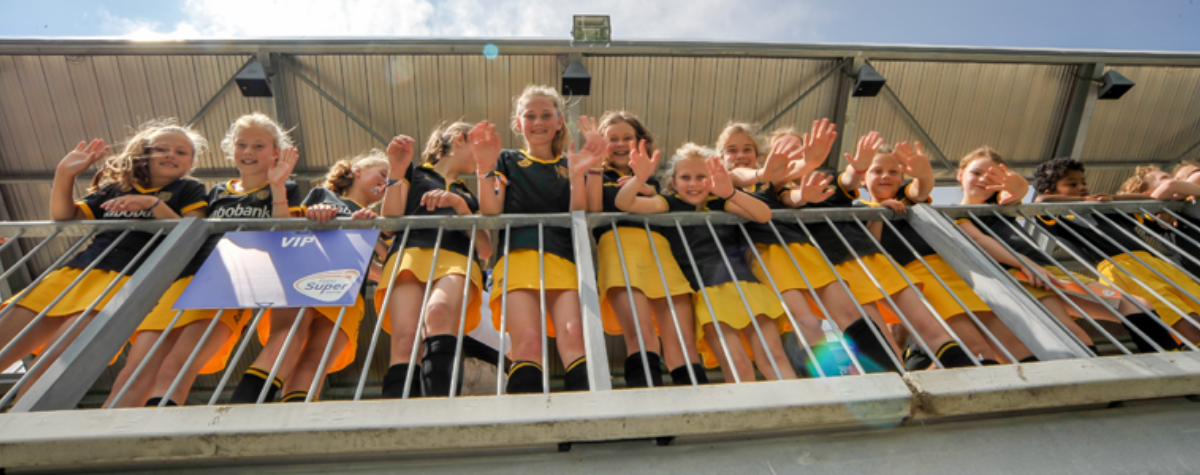
Our club uniform consists of a black shirt, yellow pants/skirt, and black socks. Club clothing is available from Teun van Pelt Sport in the club shop or in the store at Hinthamerstraat 135. More information can be found here.
Players are required to wear shin guards and a mouth guard (for mouth protection)
Keeperschool
Our club has its own goalkeeping school that trains our goalkeepers. The school ensures that each team receives goalkeeping equipment at the start of the season. After the season, the team returns the equipment. It is then inspected and, if necessary, repaired.
Website
You can also find plenty of information about our association on our website, including under "ASSOCIATION."
Volunteers
Parents or players interested in coaching for a season can inform the youth committee. Interested in doing something else for the club? Let us know at jeugdcommissie@hcdenbosch.nl.
We rely on everyone's cooperation and thank you in advance for your contribution to our association! We also hope that this will help us reach a new group of volunteers who may want to become more involved in a committee in the (near) future.
Rules evenings, information evenings for new parents
For parents who would like to learn more about hockey, we organize rules evenings. Parents can also get their referee card, which is necessary to officiate the large number of Saturday matches. For parents whose children are just starting out, the mini-committee holds a general information meeting at the beginning of the season.